







Chin Human Rights Organization (CHRO)

About Chinland

E-mail Print
Location:

The Chinland locates in Southeast Asia and lies between the longitude 92.15ºE and Chinland97ºE, and in between the latitude 18ºN and 27.30ºN.

Bangladesh is to its Southwest, Manipur State of India is to its Northwest, China is to its North, Burma is to its East, and Arakan is to its South.

Geographical Features:

With an area of circa 36 000 square kilometres, the present day Chinland - a mountainous landscape stretching along the present day Indo-Burma border - is slightly smaller than Switzerland.

Chinland is rich in natural flora (orchids etc) and fauna (Elephant, Tiger, Bear, Wild Boar, Various kinds of monkeys, barking deer, wild goat and various kinds of birds) and alpine flora is very common in the country.

The highest mountain in Chinland is Khawnutum (Mount Victoria). The biggest river in Chinland is known as Kaladan river. The biggest lake is called Rih Lake.

Climate:

Chinland has a mild hot wet climate. April and May are the hottest months of the year where average temperatures of the months range from 60º F (15.5º C) to 80º (21º C).

Average temperature in the cold seasons is below 40º F (4.4º C). In the cold seasons, temperatures fall as low as freezing point of water in the higher parts of mountains.

Average annual rainfall is 80 – 120 inches. The Southern part of Chinland gets more due to the storms come from Bay of Bengal.

Population:

The population of the present Chin state (in Burma) is circa half million.Chin People The Chins inhabiting in Chinland and its territories are approximately one and half million.

People:

The Chins are of the Mongoloid race and descended from central China southwards and settled in the present Chinland.

The Chins are composed with several tribes such as: Asho tribe, Cho Tribe, Khumi Tribe, Kuki Tribe, Laimi Tribe, Lushai Tribe , Zomi Tribe, and so on.

National Symbols:

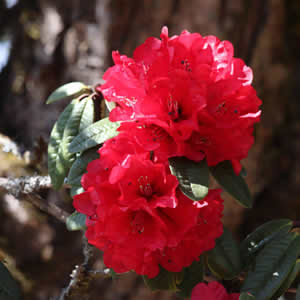
Hornbill, Mythun or Gayal, and Rhododendron are national symbols of the Chins.

Famous Natural Features:

Highest Mountain Khawnutuam (Mt. Victoria)Biggest River Kaladam River Biggest Lake Rih Lake

Religions in Chinland:

Christian Over 70% of the population Buddhist, animist and others About 30%

Culture and language:

As Chinland is endowed by many dales and hills as well as enriched by various floras and faunas, the culture and literature of the Chins are also diverse and rich though embedded in a single domain (or) ascended from a single domain, the Chin.

There is no fundamental differences in Chin language and culture, however, the Chins have minor differences in their language and culture to suit different environments accepting them as verities of tradition and as the richness of Chin literature and culture.

The Chins are rich in folk tales, folk dances, folk music, as well as musical instruments. The Chin cultural heritages are preserved, maintained, and transformed from one generation to another by oral history before the Chins have writing system in early 1900s. The arrival of Christian missionaries in early 1900s, again, enhanced the culture and language of the Chins into a more sophisticate ways. Today, over seventy percent of the Chins are Christians but minority of the Chins are also devotees of Buddhism, Traditional Chin religion, and others.

The Chin language descended from Tibeto-Burman language domain. However, each tribal group speaks its own dialect, but Burmese is widely used in Chinland due to Burmanization of military regime for over five decades. The Chins are known as honest, tolerant, brave, and religious people. This distinctness of language and culture indicate that the Chins are one of the indigenous peoples in their own land.
 
You are here: Home About us About Chinland

Refugees

thumbnail-1
Thousands of Chin families, men, women and children have fled to India, Bangladesh Thailand and Malaysia and other countries to escape political suppression, forced labour, religious persecution and other forms of human rights violations. It is estimated that at least 60,000 Chin refugees are living in India while about 10,000 thousands more live in Malaysia. Several thousands sought refuge in other countries.
Read more ...

Humanitarian issues

humantanian_issue
As the security and humanitarian conditions of Chin refugees from Burma in neighboring countries, especially in India and Malaysia is worsening, one of the CHRO’s main activities is protection, empowerment and providing emergency humanitarian assistance to Chin refugees. The following are some of the CHRO activities on refugee concern
Read more ...

Forced labour reports

forcedlabout_issue
Each block of villages in Paletwa area, Southern Chin State, were forced to supply wood of 75 cubic feet per block. The defaulter Hemapi block had to pay the fine of Ks. 60000 to Major Zaw Tun, the battalion commander of Sinletwa. The Battalion, Light Infantry Battalion LIB 538, issued an order that each of the 18 blocks in the surrounding area must saw the wood and send to him.
Read more ...

Photos

angelina_jolie

Videos

cnd_japan

Rhododendron

hngakchia